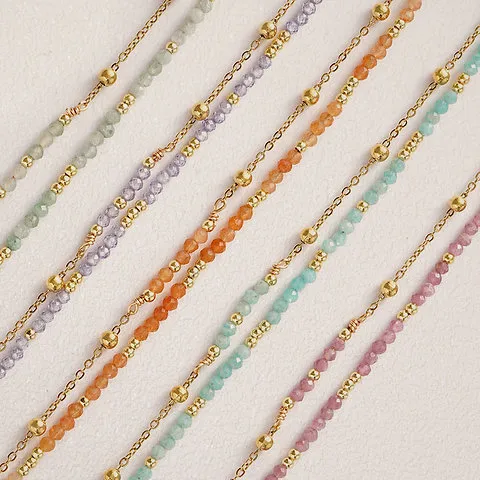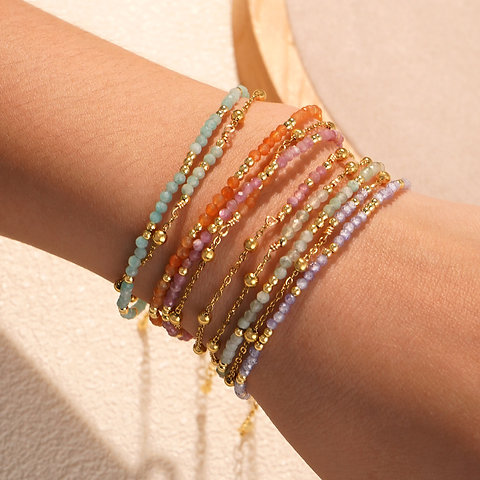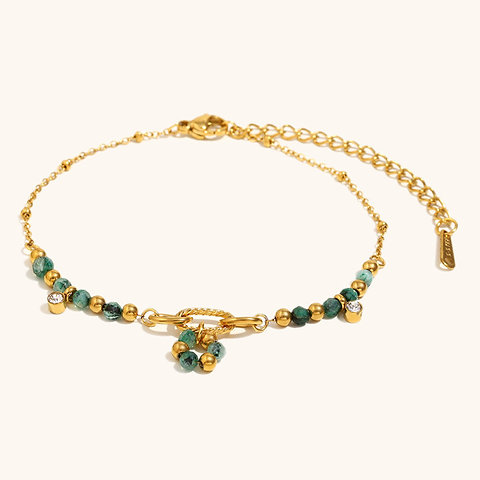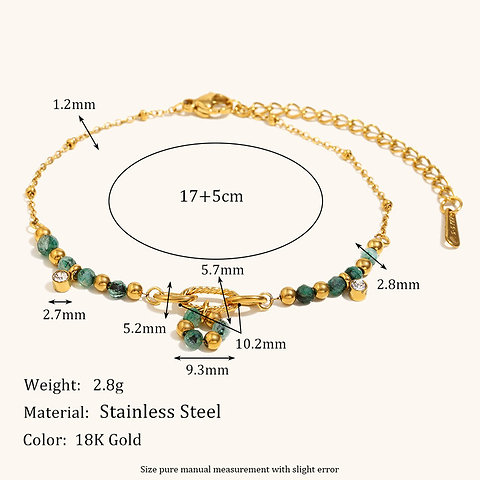
For years, natural stone jewelry has been closely associated with sterling silver and brass.
From turquoise rings and moonstone pendants to malachite bracelets and labradorite earrings, natural stones have traditionally been paired with softer metals that are easier to shape, polish, and set by hand.
Today, however, the market is beginning to change.
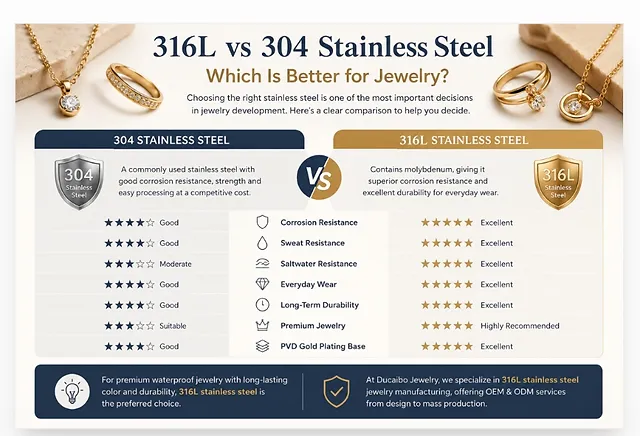
More jewelry brands are exploring how existing natural stone collections can be successfully redeveloped in 316L stainless steel.
This shift is not simply about reducing material costs.
It is driven by changing consumer expectations.
Modern customers want jewelry that is:
✔ More durable
✔ Sweat-resistant
✔ Hypoallergenic
✔ Comfortable for everyday wear
✔ Less prone to tarnishing and discoloration
As a result, many premium jewelry brands are evaluating whether stainless steel can provide the same luxury appearance while improving long-term product performance.
Why Natural Stone Jewelry Brands Are Rethinking Traditional Materials
For decades, silver and brass were the default choices for gemstone and natural stone jewelry.
However, many brands now face increasing challenges:
Rising silver prices
Rising gold price
Tarnishing and oxidation
Plating durability concerns
Skin discoloration complaints
Increasing customer expectations for everyday wear
Consumers rarely ask what metal sits underneath a gemstone.
Instead, they notice whether the jewelry still looks beautiful months later.
Many brands are therefore exploring stainless steel not as a cheaper alternative, but as a more durable foundation for modern jewelry collections.
What We Are Seeing In The Market
At Ducaibo Jewelry, we have noticed a growing number of inquiries from brands looking to redevelop existing silver and brass natural stone collections in stainless steel.
Initially, most inquiries came from sterling silver and high-end brass brands.
More recently, an increasing number of premium brass jewelry brands have begun exploring the same transition.
Interestingly, cost reduction is rarely the only objective.
Many brands are focused on:
✔ Reducing customer complaints
✔ Improving color durability
✔ Creating more waterproof-friendly collections
✔ Increasing repeat purchases
✔ Building products better suited for modern lifestyles
This suggests that material selection is increasingly becoming a product strategy decision rather than simply a sourcing decision.
Why Natural Stone Brands Are Exploring Stainless Steel Beyond Durability
Many brands initially explore stainless steel because of durability concerns.
However, after evaluating the material more closely, they often discover additional business advantages.
Compared with sterling silver and brass, 316L stainless steel offers more stable material costs while maintaining a premium appearance when combined with natural stones, mirror polishing, and high-quality PVD finishes.
For many collections, this creates an opportunity to:
✔ Improve profit margins
✔ Reduce dependence on volatile precious metal prices
✔ Maintain consistent retail pricing
✔ Deliver better long-term product performance
In today's market, the goal is not simply to reduce costs.
It is to create products that remain beautiful, durable, and commercially sustainable.
Real Case
The trend is not theoretical.
We are already seeing brands successfully make this transition in real projects.
One European brand recently approached us to convert a 10-piece malachite collection from sterling silver to 316L stainless steel.
Their primary concern was not cost — it was customer complaints about tarnishing and stone loosening after a few months of wear.
By redesigning the stone seats and adjusting the setting technique specifically for steel's hardness, we helped them achieve:
The same visual appearance
Not increasing production cost per unit
Significantly improved stone security
less customer complain rate
The collection is now one of their best-selling lines, with noticeably fewer after-sales issues.
Why Natural Stone Jewelry Is More Difficult In Stainless Steel
Many jewelry brands assume that converting a natural stone design from silver or brass into stainless steel is a straightforward process.
In reality, natural stone jewelry is often one of the most challenging categories to redevelop.
The reason is simple:
Natural stones are fragile.
Stainless steel is hard.
Silver and brass allow artisans to make small adjustments during production.
Stainless steel requires significantly greater precision.
A setting structure that works perfectly in silver may crack a natural stone or fail completely when recreated in stainless steel.
This is why successful conversion projects require engineering, not simply material substitution.
Four Engineering Challenges Behind Natural Stone Stainless Steel Jewelry
1. Stone Setting Structure Redesign
Unlike calibrated cubic zirconia, natural stones often vary slightly in size and shape.
Stone seats and setting structures must be redesigned to accommodate these variations while maintaining stone security.
2. Precision CNC Stone Seats
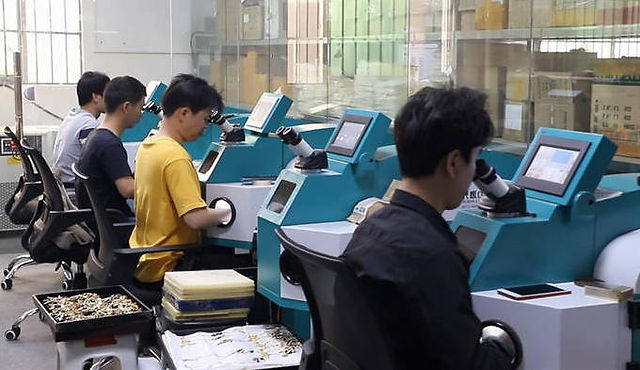
Because stainless steel cannot be manipulated like silver, stone seats require much higher manufacturing precision.
Unlike silver, which can be adjusted during setting, steel requires micron-level precision.
Our CNC-machined seats achieve ±0.02mm accuracy, ensuring stones can be securely locked into place with minimal dependence on adhesives.
This precision is especially critical when working with fragile natural stones, where excessive pressure during setting can cause cracking or breakage.
3. Weight Optimization
Natural stones already add significant weight.
Combined with stainless steel, poorly engineered designs may become uncomfortable for daily wear.
Structural optimization and hollow engineering techniques help reduce weight by 40-50% where needed, while preserving durability and the premium feel of the finished piece.
4. Surface Finishing Around Natural Stones
Aggressive polishing can damage delicate stone surfaces.
Production sequences must be carefully planned to achieve luxury-level polishing while protecting natural stones throughout the manufacturing process.
This is why we recommend that brands send physical samples whenever possible — so our engineering team can identify potential issues before production begins.
Understanding Waterproof Jewelry And Natural Stones
One important clarification is that not all natural stones should be treated as fully waterproof.
While 316L stainless steel provides excellent resistance to water, sweat, and daily wear, certain natural stones remain porous and require proper care.
For example:
Turquoise and moon stone may absorb moisture and oils, which can affect its color over time
Malachite can be sensitive to chemicals found in soaps and perfumes
Some softer stones (like opal or pearl) may be affected by prolonged water exposure
For this reason, we recommend describing these collections as:
"Durable stainless steel jewelry with natural stones"
rather than claiming every natural stone component is completely waterproof.
Being transparent about material characteristics helps brands build trust and reduce avoidable customer complaints.
How Stainless Steel Achieves A Luxury Appearance
Many brands worry that stainless steel cannot replicate the premium appearance traditionally associated with silver jewelry.
In reality, manufacturing quality matters more than the base material.
Through:
Precision casting
Mirror polishing
Advanced stone setting
PVD vacuum plating
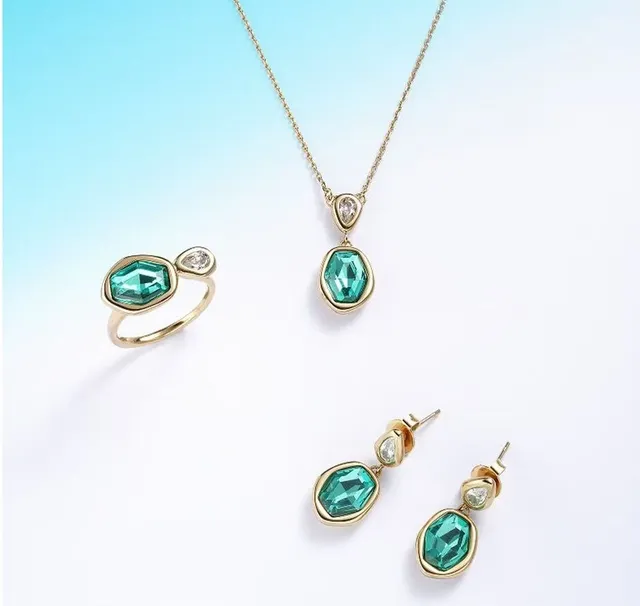
stainless steel can achieve rich 18K gold, rose gold, black, and gunmetal finishes while maintaining excellent durability.
Unlike traditional electroplating, which can flake within months, premium PVD coating bonds to the metal surface at a molecular level, providing significantly improved scratch resistance and color longevity.
For brands concerned about aesthetics, this means natural stone collections can deliver both luxury appearance and long-term performance — a combination that many traditional materials struggle to offer.
Popular Natural Stones Used In Stainless Steel Jewelry
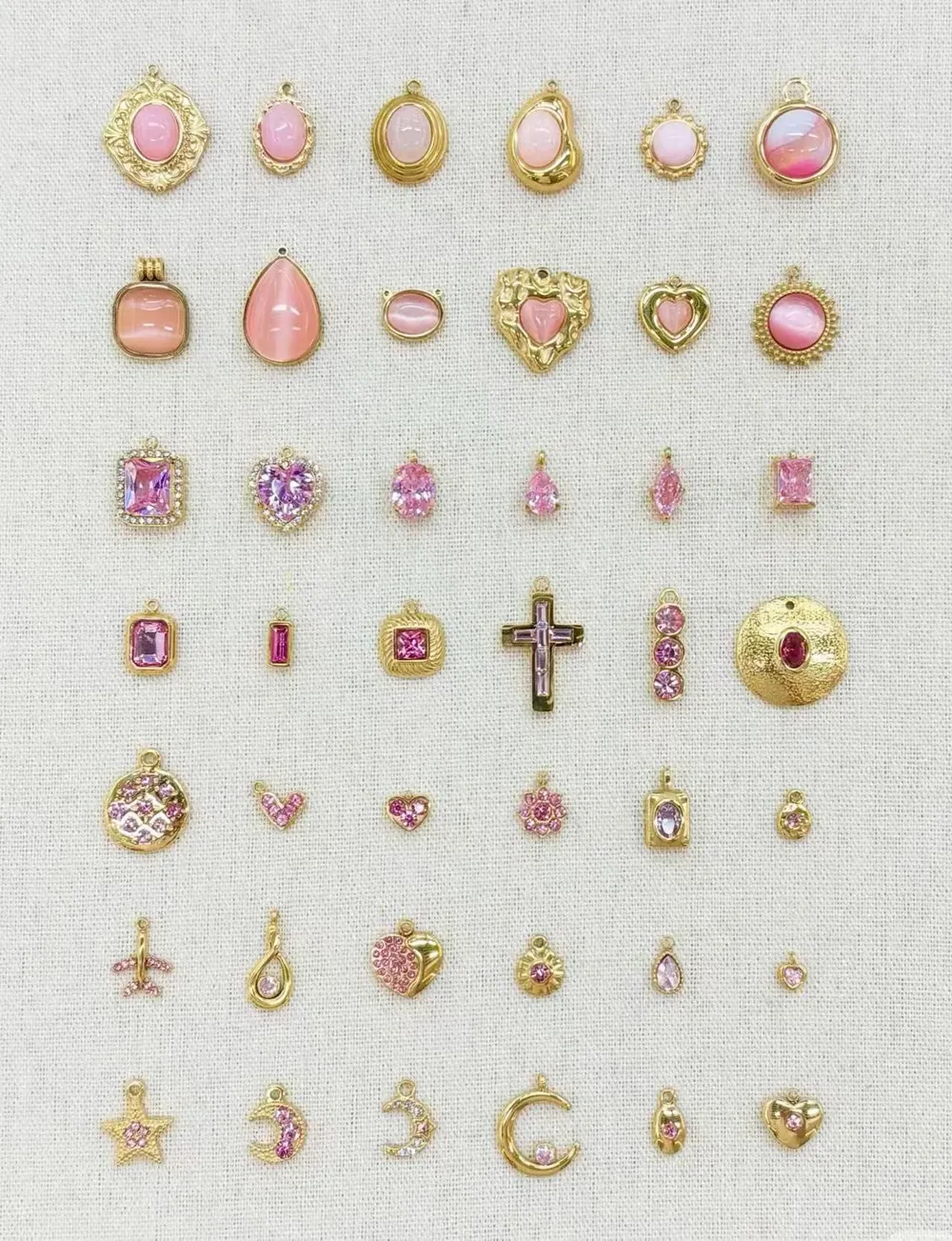
Some of the most successful combinations include:
Turquoise
Perfect for resort, bohemian, and summer collections.
Moonstone
Popular in minimalist and spiritual-inspired jewelry.
Labradorite
Valued for its unique color play and premium appearance.
Malachite
Increasingly used in luxury-inspired collections.
Tiger Eye
Popular in both men's and women's jewelry collections.
Best Natural Stones For Stainless Steel Conversion
| Stone | Conversion Difficulty |
| Turquoise | Medium |
| Labradorite | Easy |
| Moonstone | Medium |
| Malachite | Medium |
| Tiger Eye | Easy |
| Opal | Difficult |
| Pearl | Difficult |
Design Compatibility Quick Check
| Design Type | Works in Steel? | Notes |
| Bezel-set stones | ✅ Excellent | Provides maximum protection for fragile stones |
| Channel-set stones | ✅ Excellent | Clean lines, very secure |
| Prong-set stones (large) | ✅ Good | Requires redesigned prong geometry |
| Prong-set stones (small, multiple) | ⚠️ Requires redesign | Micro-prongs need CNC precision or high quality mold |
| Pavé-set stones | ⚠️ Requires redesign | Higher precision required due to steel hardness,need high quality mold |
Not sure if your design will translate? Send us photos of your current silver or brass collection.Our engineering team will provide a free preliminary assessment before sampling begins.As a stainless steel jewelry OEM partner,Our engineers will review and advise on modifications — before you invest in sampling.
FAQ
Can natural stones be used in stainless steel jewelry?
Yes. Many natural stones can be successfully incorporated into stainless steel jewelry when proper engineering and stone-setting techniques are applied.
Is stainless steel safe for sensitive skin?
Medical-grade 316L stainless steel is widely recognized for its excellent skin compatibility and is commonly used in hypoallergenic jewelry.
Does stainless steel make gemstone jewelry look less luxurious?
Not necessarily. Premium polishing, advanced stone setting, and high-quality PVD finishing allow stainless steel gemstone jewelry to achieve a sophisticated luxury appearance.
Which natural stones work best with stainless steel?
Turquoise, moonstone, labradorite, malachite, tiger eye, and various agate stones are among the most popular choices.
Can existing silver or brass gemstone jewelry designs be converted into stainless steel?
In many cases, yes. However, the stone-setting structure usually requires engineering modifications to accommodate the different characteristics of stainless steel.
Can stainless steel jewelry feel as premium as silver?
Yes. Premium polishing, precision stone setting, and advanced PVD vacuum plating allow stainless steel jewelry to achieve a refined appearance comparable to many silver collections. Modern consumers increasingly judge jewelry by durability, comfort, and long-term appearance rather than material alone.
Do natural stones require glue in stainless steel jewelry?
Not always. While some designs may incorporate adhesives as part of the assembly process, well-engineered stainless steel jewelry can often rely on mechanical stone-setting structures that significantly reduce dependence on glue.
Which natural stones are not recommended for stainless steel jewelry?
Most natural stones can be incorporated into stainless steel jewelry. However, highly fragile stones or stones with significant natural fractures may require special engineering considerations. Each project should be evaluated individually.
Can existing silver or brass gemstone collections be converted into stainless steel?
In many cases, yes. However, successful conversion usually requires redesigning stone-setting structures, wall thicknesses, and assembly methods to accommodate the different characteristics of stainless steel.
How long does a natural stone stainless steel jewelry development project take?
Initial engineering review typically takes 1-3 business days. Sample development usually requires 15–25 days, while highly complex designs may take 25–35 days due to mold development, structural testing, and stone-setting validation.
Related Articles
Why More Jewelry Brands Are Moving From Silver And Brass To Stainless Steel
Why Stone Setting Becomes More Difficult In Stainless Steel
Can Stainless Steel Feel As Premium As Silver?
Conclusion
The challenge is not simply combining natural stones with stainless steel.
The challenge is preserving the beauty customers already love while improving durability, comfort, and long-term performance.
As more premium jewelry brands rethink traditional materials, natural stone stainless steel jewelry is becoming an increasingly important category for modern collections.
When engineered correctly, it offers the opportunity to combine natural beauty with everyday durability — a combination many consumers are actively seeking today.
📩 Ready to Explore Natural Stone Stainless Steel Jewelry?
We help brands successfully transition their natural stone collections from silver and brass to durable 316L stainless steel.
What Ducaibo Offers:
| Feature | Details |
| ✅ Low MOQ | 200 pieces per design, 100–150 pcs per ring size |
| ✅ Full Documentation | Mill Test Reports (MTR) |
| ✅ PVD Coating | 1+ / 2+ / 3+ year tarnish-free guarantee |
| ✅ Fast Sampling | 15-25 days for prototypes, 25-35 days for complex designs |
| ✅ Compliance | REACH, RoHS, Prop 65, EN 1811 |
Get in Touch:
📬 Direct B2B Email: ivyli@ducaibojewelry.com
💬 WhatsApp Corporate Support: +86 136 5268 0103
🌐 Visit Our Factory Website: www.ducaibojewelry.com
Send us your design sketches or custom tech packs today, and let's construct your brand's next best-selling natural stone stainless steel collection together.