Introduction
The global demand for stainless steel jewelry has exploded over the past few years. According to a 2025 industry report by Grand View Research, the global stainless steel jewelry market is projected to grow at 8.2% CAGR through 2030, driven by increasing consumer demand for hypoallergenic, waterproof, and tarnish-free accessories.
For Shopify store owners, fashion brand founders, and wholesalers, stainless steel has become the undisputed gold standard for accessible luxury. It delivers unmatched durability, premium structural weight, and high-margin retail potential. However, navigating the sourcing landscape can be a minefield.
Many buyers place large wholesale orders only to receive batches with rough edges, weak solder joints, or metal that mysteriously tarnishes after a few months. The secret to safeguarding your brand's reputation lies in understanding how high-quality stainless steel jewelry is actually made — and how to vet your production partner.
As a leading OEM/ODM stainless steel jewelry manufacturer, we have spent years perfecting precision engineering for global fashion brands. In this ultimate guide, we pull back the curtain on the step-by-step manufacturing process inside a top-tier Chinese factory and share insider strategies to help you source the perfect collection.
What is Stainless Steel Jewelry? (And the Grades That Matter)
Stainless steel is a high-performance ferrous alloy enriched with chromium (minimum 10.5%), nickel, and other essential elements. The magic lies in the chromium: when exposed to oxygen, it forms an invisible, self-healing microscopic layer that prevents oxidation, rust, and tarnish.
However, not all stainless steel is created equal for wearable accessories.
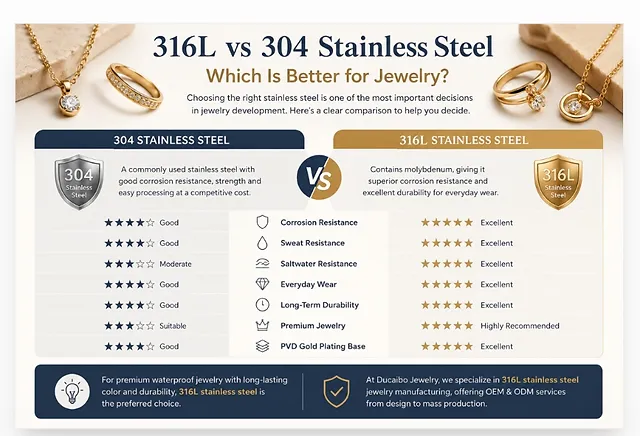
The Grades: 304 vs 316L vs 316LVM
| Grade | Key Characteristics | Best For | Risk Factors |
| 304 Stainless Steel | 18% chromium, 8% nickel, 0% molybdenum. Budget-friendly. | Kitchenware, low-cost fast fashion, short-term wear | Lacks resistance to sweat chloride. May cause "green skin" after 3–6 months. |
| 316L Stainless Steel (Surgical Steel) | 16–18% chromium, 10–14% nickel, 2–3% molybdenum. Low carbon ("L"). | Premium daily-wear jewelry, waterproof collections, sensitive skin | Higher upfront cost. |
| 316LVM (Medical Grade) | Vacuum-melted version of 316L. Highest purity. | Initial body piercings, medical implants, luxury jewelry | Highest cost, over-specified for most fashion jewelry. |
Why Elite Brands Choose 316L + PVD Coating
At Ducaibo Jewelry, we use certified medical-grade 316L stainless steel as our foundational base. When combined with our advanced Physical Vapor Deposition (PVD) gold plating, our pieces deliver a 1+year or 2+ year tarnish-free, hypoallergenic guarantee — protecting your brand from "green skin" customer complaints and expensive returns.
According to ASTM F138 standard, 316L stainless steel has a nickel release rate below 0.05 μg/cm²/week, making it safe for even the most sensitive skin types.
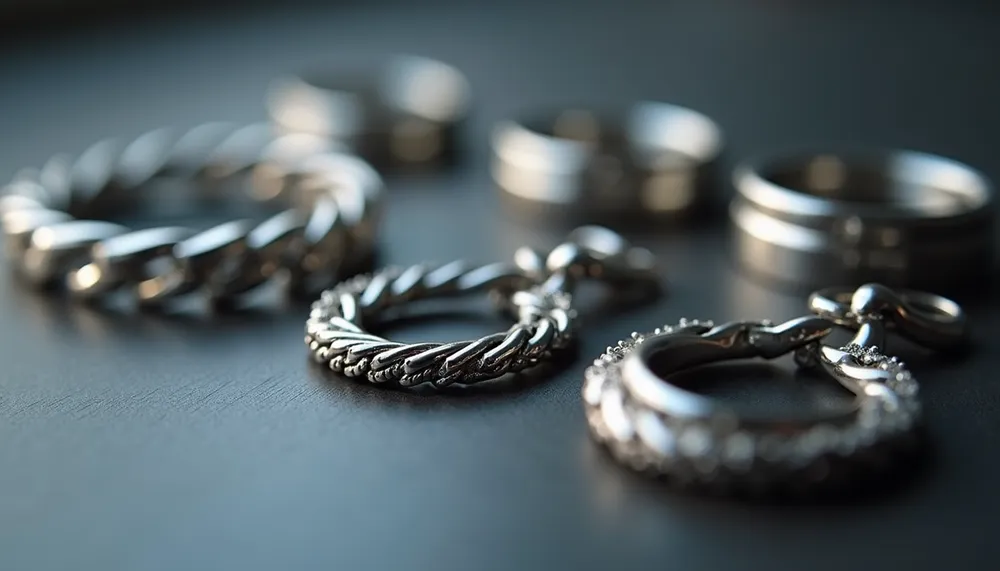
The Stainless Steel Jewelry Manufacturing Process: Step-by-Step
Step 1: Raw Material Auditing & Verification
The foundation of a flawless piece of jewelry happens before a single machine is turned on. Reputable manufacturers strictly vet raw metal sheets, wires, and tubes.
The Risk: Untrustworthy suppliers often blend cheaper 304 scrap metal into production runs to save costs.
The Factory Defense: Reliable partners enforce Positive Material Identification (PMI) testing via X-ray guns. Always request a Mill Test Report (MTR) from your factory to verify the precise metallurgy (such as 2–3% molybdenum content for 316L).
Step 2: Advanced CAD Design & 3D Prototyping
Every viral jewelry collection starts with a precise structural blueprint. Utilizing advanced Computer-Aided Design (CAD) software, industrial engineers translate a brand's sketches into exact 3D models.
At this stage, our production team meticulously calculates factors like wall thickness, tolerances, and structural weights.
For chunky statement pieces or large hoop earrings, we deploy specialized hollow-tube lightweight engineering to ensure the design looks massive but remains comfortable for all-day wear.
Step 3: High-Precision Investment Casting vs. Laser Cutting
Depending on the geometry of the design, the manufacturing splits into two primary high-tech pathways:
| Method | Best For | Process | Tolerance |
| Lost-Wax Investment Casting | Organic shapes, 3D charms, signet rings | Molten 316L steel poured into ceramic molds at 1500°C+ | ±0.1mm |
| Fiber Laser Cutting | Geometric pendants, discs, custom logos | Computer-guided laser beams cut solid steel sheets | ±0.01mm |
Step 4: Stainless Steel Jewelry Manufacturing Process: Mechanical Forming & Artisan Shaping
As part of the stainless steel jewelry manufacturing process, once the raw cast blanks or laser-cut profiles exit the machinery, they undergo heavy-duty mechanical forming.
Skilled bench artisans use calibrated stamps, hydraulic presses, bending jigs, and hand-hammering to mold the steel into its final shape. This step requires immense physical precision because 316L stainless steel is incredibly dense and unyielding compared to soft metals like brass or silver.
Step 5: High-Strength Laser Joining and Soldering
Connecting small jewelry links, jump rings, or attaching earring posts to heavy backings requires structural welding.
Standard soldering often introduces low-grade filler metals that rust over time.
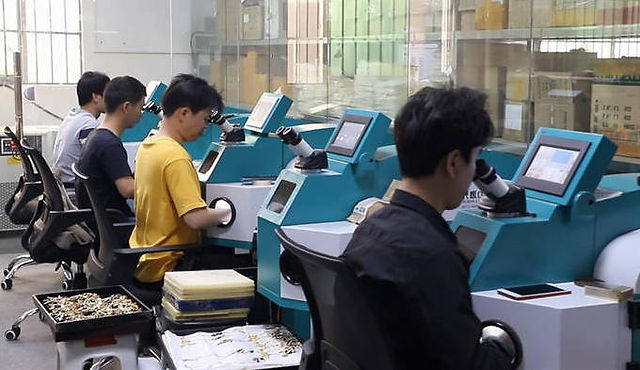
Top-tier solution: State-of-the-art Laser Welding and TIG welding. Laser welding fires concentrated thermal energy into a micro-point, fusing the 316L steel molecules together directly without adding discolored or weaker filler alloys. This yields near-invisible, break-proof joints.
Step 6: Multi-Stage Polishing and Surface Finishing
Stainless steel does not naturally possess a luxurious shine after casting — it exits the mold dull and grey. Achieving a flawless, mirror-like reflection requires a comprehensive, multi-phase polishing protocol:
Centrifugal Tumble Polishing: Raw pieces are placed into high-speed industrial rotators filled with ceramic or walnut-shell media to strip away microscopic scale and burrs.
Precision Hand Polishing: Experienced polishers use custom cotton wheels and specialized diamond pastes to manually buff every crevice, curve, and facet.
Ducaibo precise hand polishing: Many brands hesitate to switch from silver to stainless steel, fearing a loss of quality. Ducaibo's mirror-polishing process — blending precision mechanical grinding with hand finishing — gives stainless steel the same soft, brilliant luster as silver. The result: a warm, non-glaring shine and a smooth, substantial feel.
The Quality Test: Look at the inside curves of a ring or the back of a pendant. A low-grade factory skips polishing these hidden zones. A world-class supplier ensures a brilliant, smooth surface across 100% of the product's geography.
Step 7: Precision Stone Setting and PVD Decoration
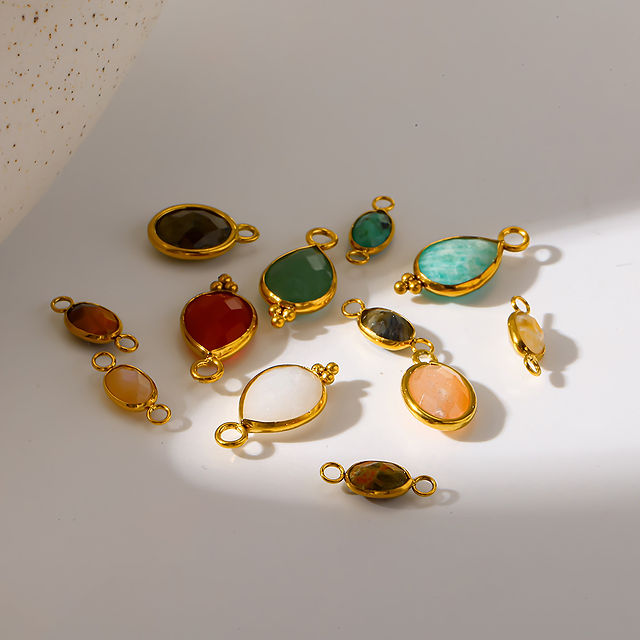
To elevate the aesthetic value, jewelry designs frequently call for accents like AAA Cubic Zirconia, natural gemstones, or pearls.
Unlike soft metals that can be bent easily over stones, stainless steel settings require meticulous hand-machining. Skilled prong, bezel, and channel settings ensure gemstones are locked permanently into position.
Concurrently, if the design calls for gold, rose gold, or gunmetal finishes, it undergoes PVD vacuum plating — bonding real gold particles atom-by-atom to the steel surface for long-lasting color retention.
Step 8: Chemical Cleaning & Strict Quality Control (QC)
As part of the stainless steel jewelry manufacturing process, before packaging, finished batches are put through multi-chamber ultrasonic cleaning lines to strip away polishing compounds, industrial oils, and static dust.
Finally, dedicated QC inspectors review each individual piece under high magnification to check for surface pitting, secure stone settings, and flawless plating consistency.
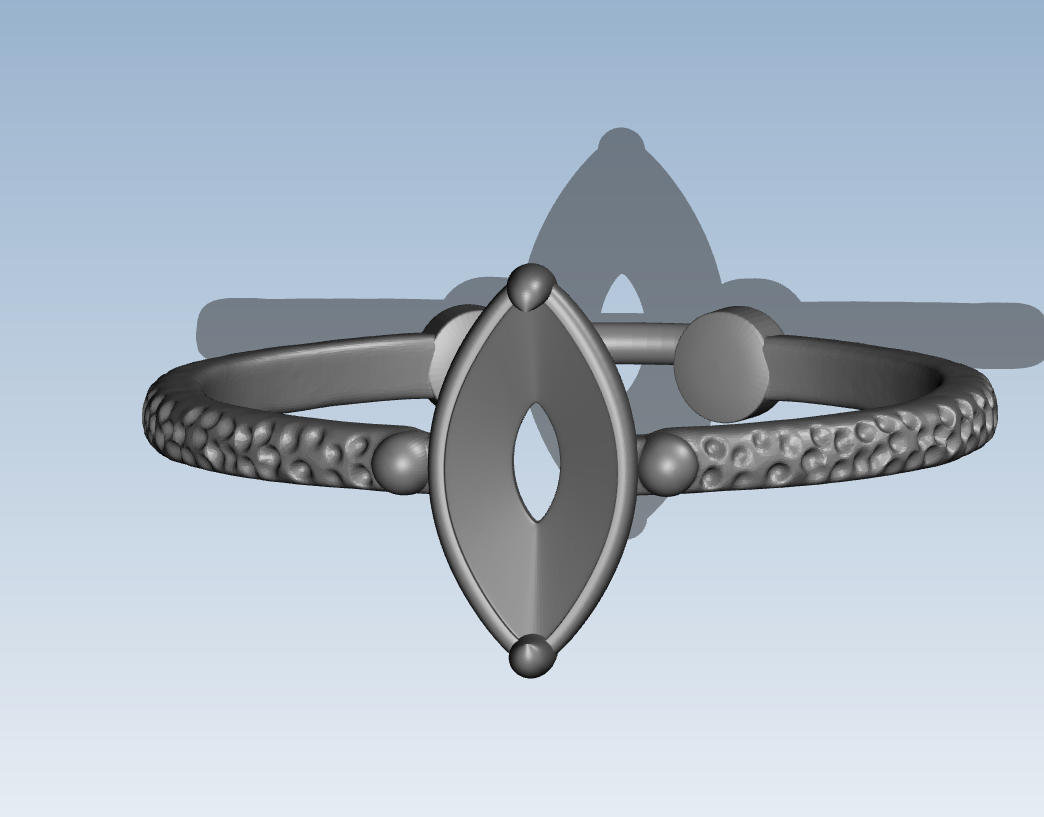
Stainless Steel Jewelry Manufacturing Process: Quality Control Checkpoints for Buyers
| Step | Key Checkpoint | Question to Ask Your Supplier |
| Raw Material | MTR Report | "Can you provide the Mill Test Report for this batch showing molybdenum content?" |
| Casting/Cutting | Edge smoothness, tolerance | "What is your dimensional tolerance in mm?" |
| Welding | Joint strength | "Do you use laser welding or traditional soldering?" |
| Polishing | Hidden surfaces | "Are interior curves and backs of pendants polished?" |
| PVD Coating | Color consistency, thickness | "How many microns is the PVD coating? What is your warranty period?" |
| Final QC | AQL sampling | "What AQL standard do you use for outgoing inspection?" |
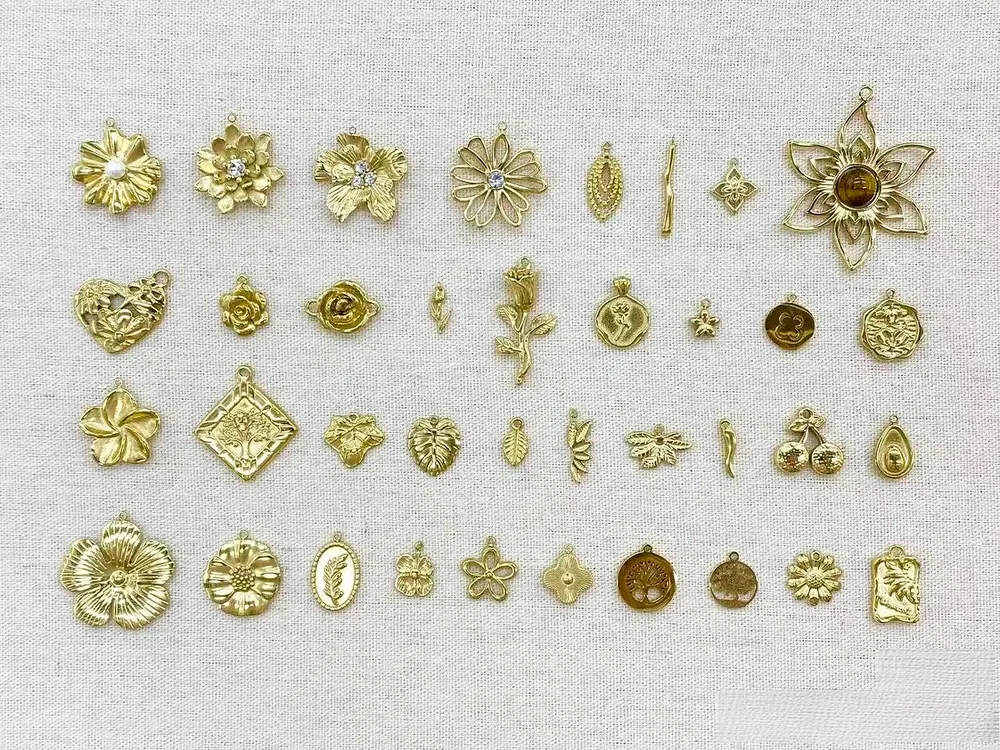
Unlocking the Wholesale Stainless Steel Jewelry Market in China
Why China Dominates the Supply Chain
China stands as the global epicenter for stainless steel jewelry production. Manufacturing hubs like Guangdong province host unparalleled industrial clusters. This concentration gives international buyers access to:
Massive production capacities
Highly skilled engineering talent
Advanced PVD plating infrastructure
Competitive, direct-from-factory raw material pricing
Market data: According to China Customs data, stainless steel jewelry exports from China reached approximately $2.8 billion in 2025, with the United States and European Union accounting for over 60% of total shipments.
Choosing the Right Sourcing Partner
When sourcing via global wholesale channels or search engines, you will encounter thousands of listings. To separate reliable manufacturing powerhouses from low-tier trading brokers, focus on three strict criteria:
| Criterion | What to Look For | Red Flags |
| True Customization (OEM/ODM) | Can manufacture directly from your CAD files or design idea | Only sells stock catalog styles |
| Flexible Low-MOQ Structures | Offers 200 pieces per design for testing | Requires 1000+ pieces minimum |
| Material Transparency | Provides MTRs, third-party lab certifications (SGS, Intertek) | Vague "stainless steel" with no grade specification |
Commercial Strategies for Sourcing Brands: The Path to Success
To scale a highly profitable jewelry business, you must marry technical quality with smart supply chain management.
Strategy 1: Leverage Premium Marketing Claims
When your factory supplies authentic 316L steel with expert PVD plating, stop labeling your items as simply "metal jewelry." Confidently use high-converting hooks like:
✅ "Waterproof" — wear in shower, pool, ocean
✅ "Gym-Proof" — sweat-resistant
✅ "Hypoallergenic" — safe for sensitive skin
✅ "Lifetime Wear" — never tarnish or rust
Retail impact: Consumers will happily pay a 3x to 5x retail premium for life-proof accessories.
Strategy 2: Diversify with Mixed-Material Sets
Boost your Average Order Value (AOV) by combining modular stainless steel chains with earth-toned acrylics, natural leather cords, or semi-precious gemstones.
This strategy creates perceived luxury without requiring complex custom metal molds for every single component.
Strategy 3: Align Your Seasonal Production Timeline
To bypass global logistics bottlenecks, launch your sampling phases at least 3 months ahead of your seasonal release.
| Timeframe | Action |
| 3+ months before launch | Begin sampling and design finalization |
| 2 months before launch | Lock in bulk production |
| 1 month before launch | Ship via sea freight (cost-effective) or air express (fast) |
If a collection falls slightly behind schedule: Partner with a factory capable of running express low-MOQ production lines paired with reliable Air Express (FedEx/DHL — 5 to 7 days transit) to capture peak holiday traffic.
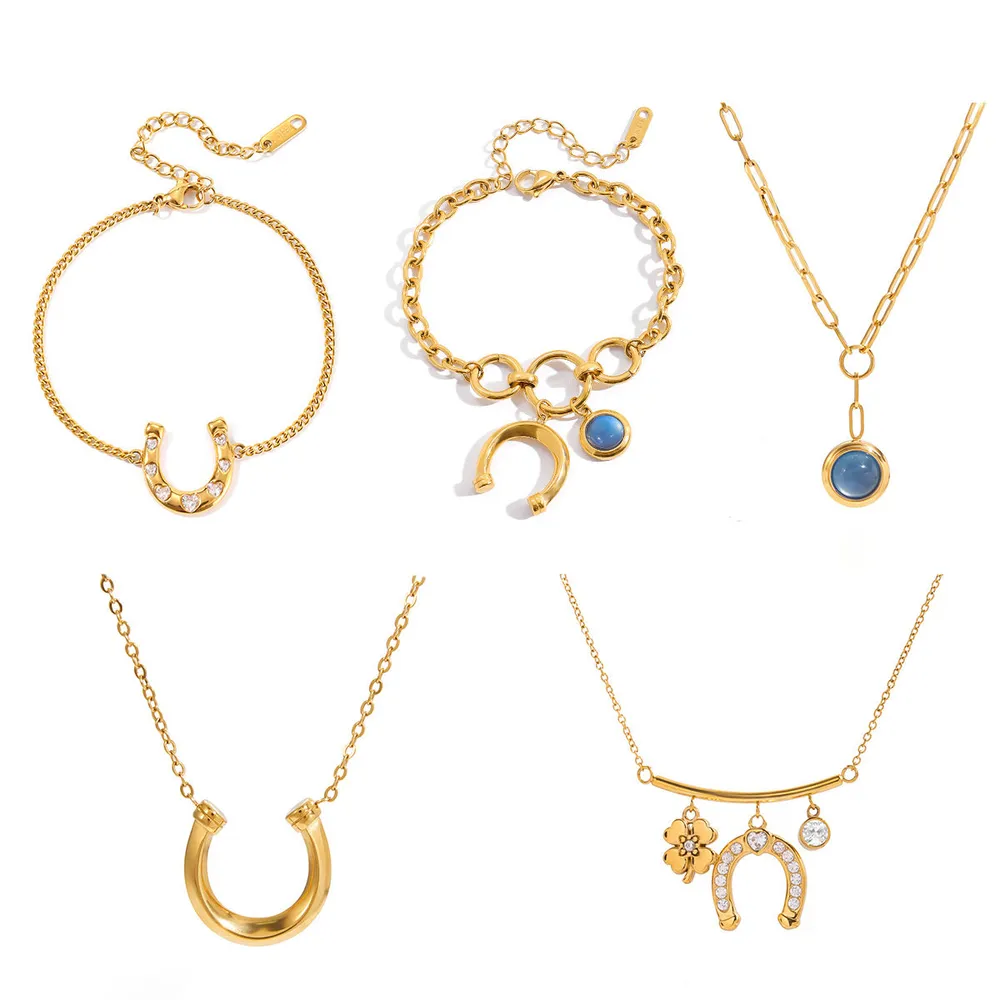
❓ Frequently Asked Questions for B2B Buyers
Q1: What is your minimum order quantity for custom designs?
A: For fully custom molds (new shapes), MOQ starts at 200 pieces per design for necklace/bracelet/anklet.For ring design ,it is 100pcs-200pcs per ring size.
Q2: How long does sampling take?
A: Simple modifications (logo engraving, chain length changes): 15–20 days. New molds (complete custom shapes): 25–35 days.
Q3: Do you ship to the USA / EU directly?
A: Yes. We ship worldwide via DHL, FedEx, or sea freight. We handle all export documentation, including commercial invoices, packing lists, and certificates of origin.
Q4: Can you provide third-party test reports?
A: Yes. We work with SGS and Intertek for nickel release testing (EN 1811:2011) and full chemical composition analysis. Reports can be provided per batch upon request.
Q5: What certifications does your factory hold?
A: We are ISO 9001:2015 certified (quality management) and BSCI audited (social compliance). Certificates available upon request.
Recommended Internal Blog Links
1.What Makes Stainless Steel Custom Jewelry Different? How to ensure a premium stainless steel jewelry?
2.Why Stainless Steel Jewelry Is Perfect for Everyday Wear
3.What Is the Most Comfortable Earring Weight for Daily Wear?
4The Ultimate B2B Sourcing Guide: Inside the Stainless Steel Jewelry ManufacturingProcess in China
5.2026 Fall & Winter Stainless Steel Jewelry Trends: TikTok, Instagram & Pinterest Analysis
6.Custom Stainless Steel Jewelry Manufacturer:Complete Guide for Brands & Designers
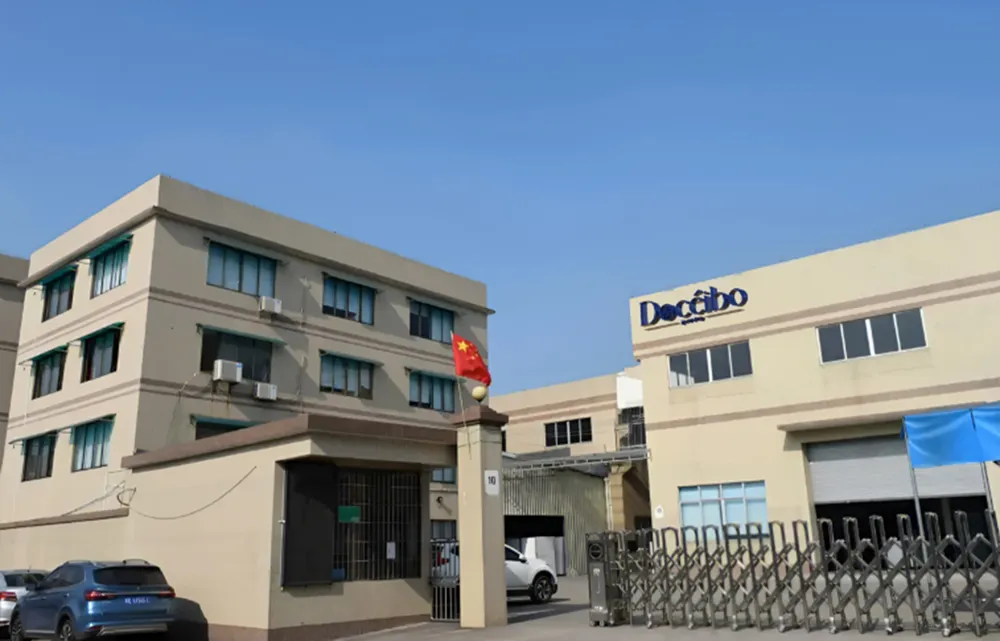
Achieving long-term success in the competitive online jewelry market requires moving past vague supplier promises and cheap material shortcuts. Sourcing medical-grade 316L stainless steel, utilizing modern casting and laser techniques, and enforcing rigorous quality checkpoints is the only way to build customer loyalty and maintain a near-zero return rate.
At Ducaibo Jewelry, we specialize in turning your creative visions into market-ready, premium stainless steel jewelry collections. Whether you are an established international wholesaler or a growing boutique seller looking to scale your inventory, we offer the complete manufacturing solution.
📩 Ready to Elevate Your Supply Chain with Certified 316L Steel?
Partner with a factory that values quality as much as you do. Connect directly with our development team today to explore how we can bring your next collection to life.
What We Offer:
| Feature | Details |
| ✅ Low MOQ Programs | Custom logo customization starting at just 100-200 pieces per design |
| ✅ Full Documentation | Authentic Mill Test Reports (MTR) provided with every batch |
| ✅ Lifetime Finishes | Multi-stage hand polishing 1+or 2+year tarnish-free PVD coating |
| ✅ Fast Engineering Turnaround | Sample prototyping in 15–25 days |
| ✅ Third-Party Testing | SGS / Intertek reports available |
| ✅ Compliance | REACH, RoHS, Prop 65, Nickel Release (EN 1811) |
Get in Touch:
📬 Direct Email Inquiry: ivyli@ducaibojewelry.com
💬 WhatsApp Corporate Support: +86 136 5268 0103
🌐 Visit Our Factory Website: www.ducaibojewelry.com
Send us your design sketches or custom tech packs today, and let's construct your brand's next best-selling collection together.
Recommended Internal Links